Income Tax Act 1961 vs 2025: The Complete Section Mapping Guide
Income Tax Act 2025 vs 1961: The Complete Section Mapping Guide
Last updated:
Quick Answer
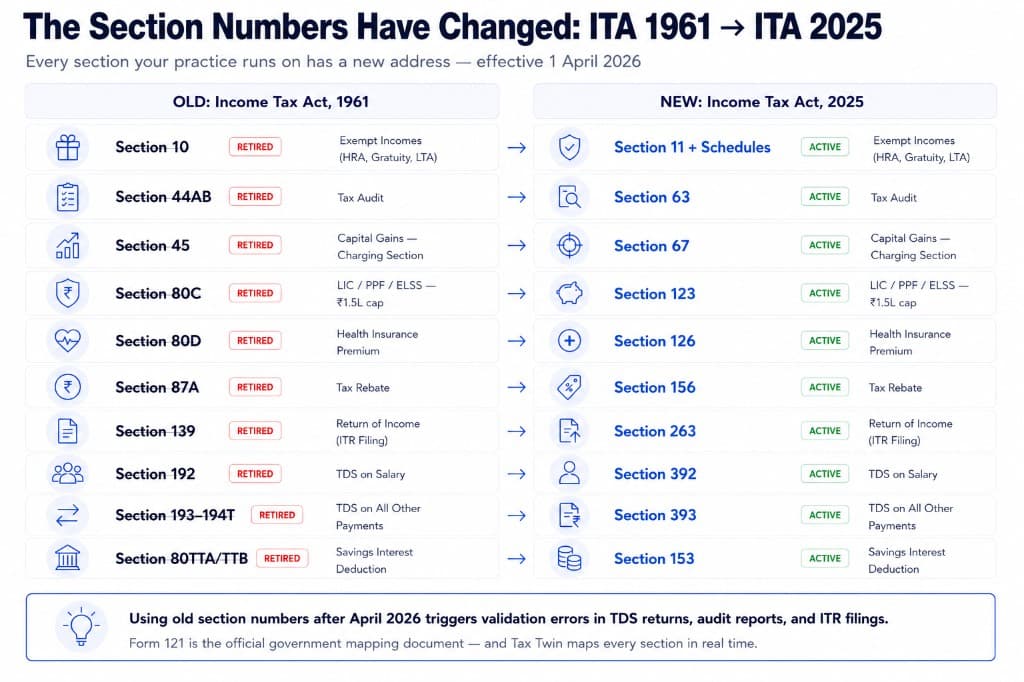
The Income Tax Act, 2025 renumbers every section of the Income Tax Act, 1961. Section 80C → Section 123. Section 44AB → Section 63. Section 45 → Section 67. Section 192 → Section 392. Section 139 → Section 263. Using old section numbers in TDS returns, audit reports, or filings after April 01, 2026 triggers system-level validation errors where the filing is governed under the New Act. This guide maps the 20 sections that matter most with practitioner notes on what changed beyond just the number.
Working through a live matter rather than a mapping table? The income tax research module reads both Acts together and returns the provision, the conditions attached to it and the judicial position in a single cited answer.
Why This Page Exists
Every CA in India has these section numbers memorized: 80C. 44AB. 139. 192. 45.
From April 01, 2026, every single one of those numbers is wrong.
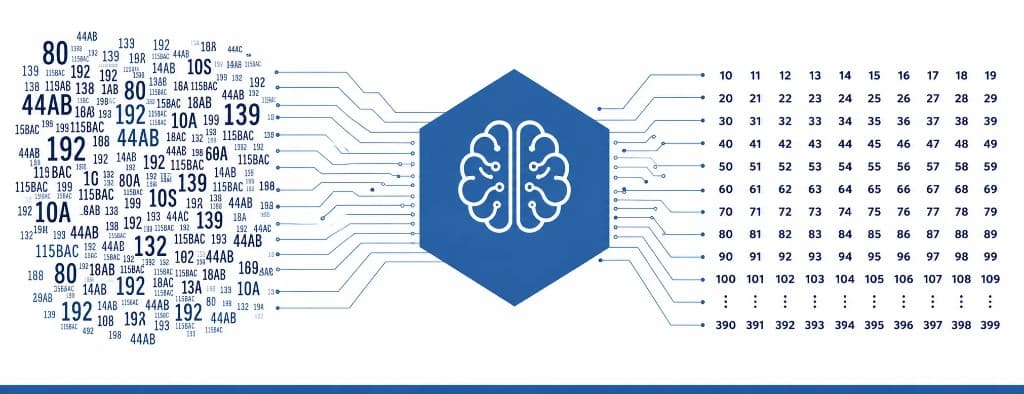
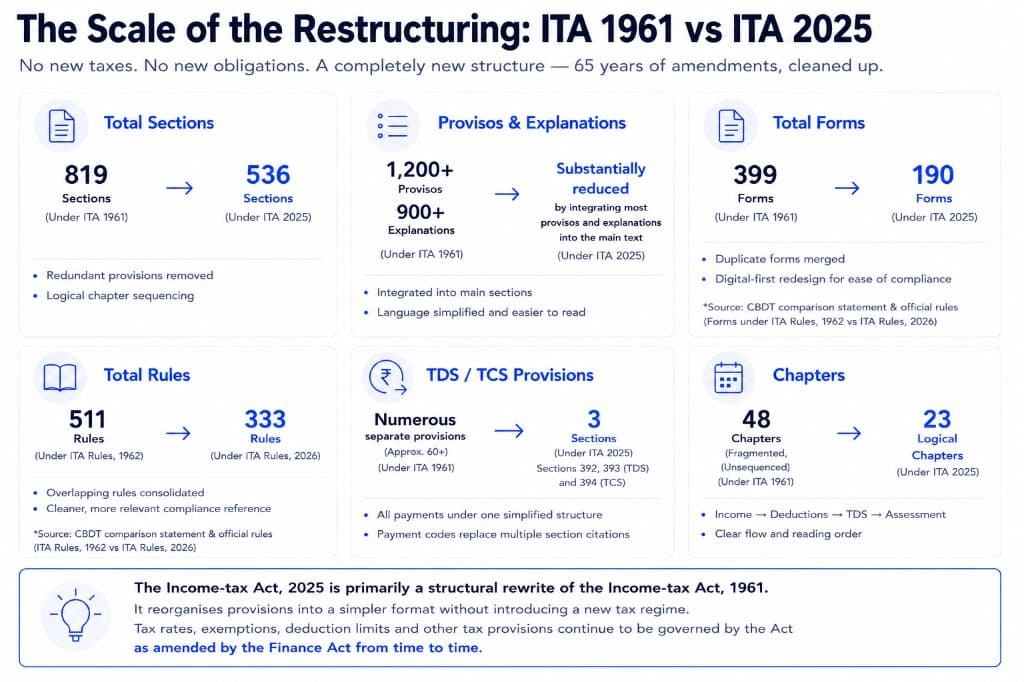
The Income Tax Act, 2025 — effective from April 01, 2026 — does not introduce new taxes or change slab rates. What it does is renumber, reorganize, and restructure every provision of the Income Tax Act, 1961 into a cleaner, leaner code. The result: over 819 sections trimmed to 536. And every section your practice runs on has a new address.
This is not a minor update. It is the most consequential renumbering of Indian tax law in 65 years.
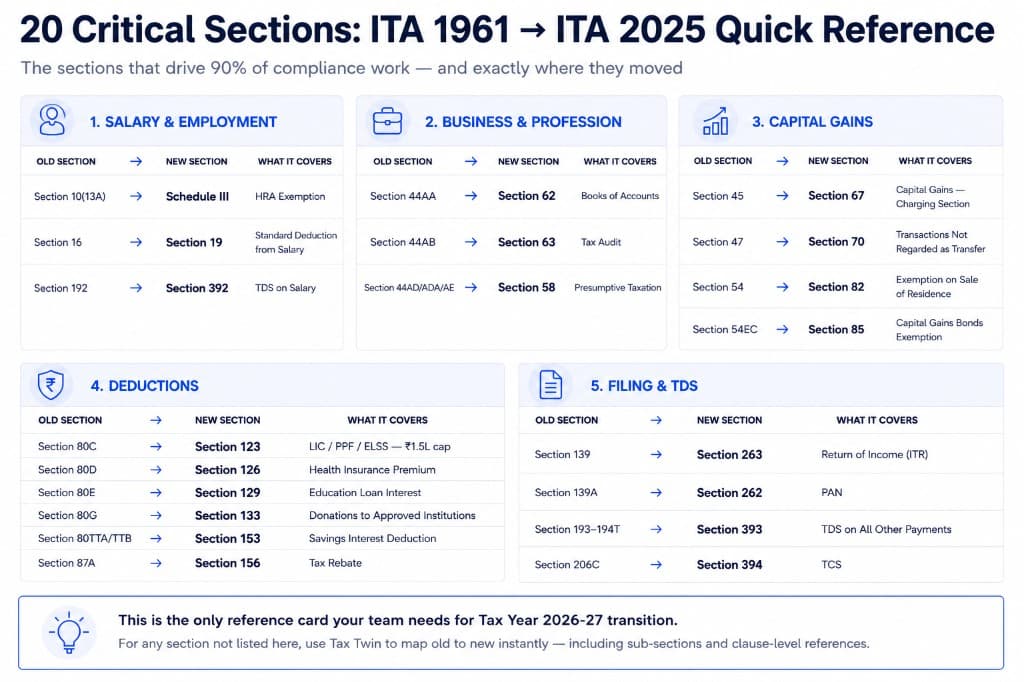
This article does not list all 536 sections. It lists the 20 sections that govern the majority of compliance work — with the old number, the new number, what the provision covers, and what you need to update in your practice.
Why Were Sections Renumbered?
Six decades of amendments left the Income Tax Act, 1961 structurally broken. Sections were inserted mid-sequence (Section 80-IAC after 80-IA), provisos stacked 12 layers deep, and TDS provisions scattered across 60+ sections with no logical grouping. By 2025, the Act had grown to 819 sections, 1,200+ provisos, and 900 explanations — many of which repeated each other.
The Income Tax Act, 2025 fixed this through four methods:
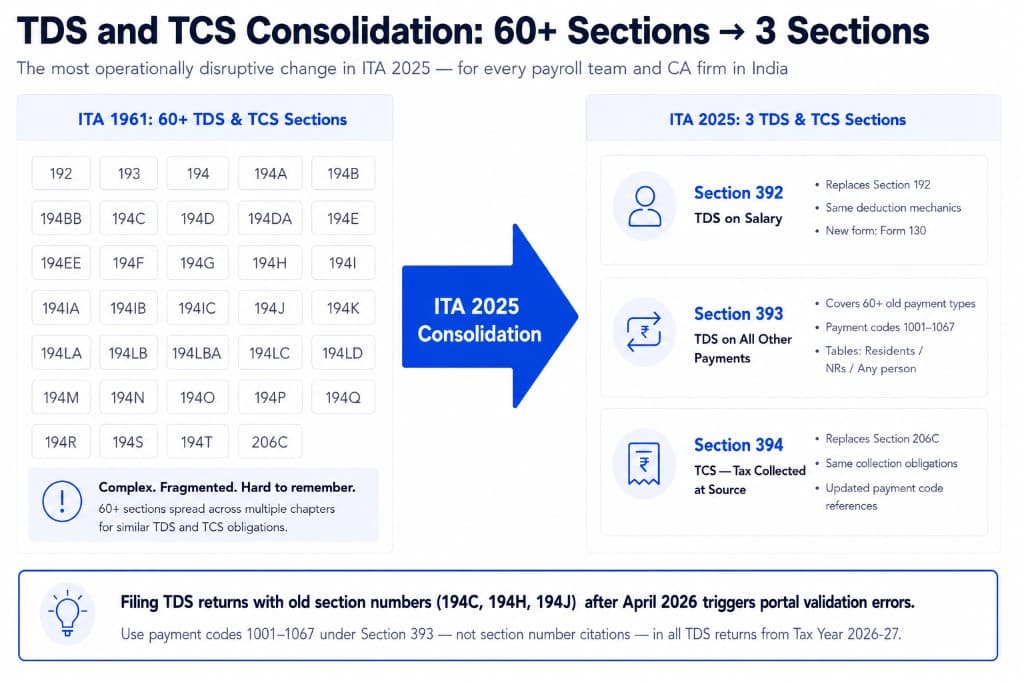
- Consolidation: Approx 69+ TDS/TCS sections trimmed into 3. All exemptions moved from Section 10 into Section 11 read with Schedules. All presumptive taxation provisions merged into Section 58.
- Absorption: 1,200 provisos and 900 explanations were absorbed into the main text of sections, written in plain language.
- Sequencing: Sections now follow logical chapter order: income heads (13–95), aggregation (96–121), deductions (122–154), TDS/TCS (391–431), assessment (432–530).
- Forms and Rules reduction: 399 forms reduced to 190. 511 rules reduced to 333.
The result is a structurally clean Act where section numbers follow logical sequence. The cost of that cleanup is that references throughout your software, templates, and internal documentation are now outdated.
The 20 Critical Sections: Old to New — A Practitioner Note
These are the sections that appear in the majority of Indian tax compliance work.
For each one: the old section, the new section, what it covers, and what practitioners must update.
1. Section 10 → Section 11 read with Schedules
Covers: Incomes not included in total income — the complete exemptions list.
Practitioner Note
- Section 10 of the 1961 Act was the longest section in the old code, with 50+ sub-clauses covering HRA, gratuity, LTA, agricultural income, and more. In the 2025 Act, exemptions move to Schedules II to VII in tabular form.
- Section 11 is the operative provision pointing to Schedules II to VII. Any template or tax memo citing 'Section 10(13A)' for HRA must now cite 'Schedule III' with the entry number 11.
2. Section 16 → Section 19
Covers: Deductions from salaries — Standard deduction, Entertainment allowance, Professional tax.
Practitioner Note
- The standard deduction (₹75,000 under the new regime, ₹50,000 under the old regime) is preserved. Section number changes from 16 to 19.
- Payroll software, Form 130 (erstwhile Form 16) formats, and tax computation templates referring to the standard deduction under the erstwhile Section 16 should be updated to reflect the corresponding provisions of the New Act.
3. Section 22 to 24 → Sections 20 to 22
Covers: Income from house property — chargeability, annual value, and deductions (30% standard deduction + home loan interest).
Practitioner Note
- Section 22 (chargeability) → Section 20.
- Section 23 (annual value) → Section 21.
- Section 24 (deductions, home loan interest) → Section 22.
- The ₹2 lakh cap on home loan interest for self-occupied property remains unchanged. Any computation sheet referencing Section 24(b) should now reference Section 22(2).
4. Section 44AA → Section 62
Covers: Maintenance of books of accounts.
Practitioner Note
- The obligation to maintain books and who is exempt is unchanged. Any notice, response, or representation referencing a client's book-keeping obligations must cite Section 62 post-April 2026.
- However, turnover thresholds and limits remain unchanged.
5. Section 44AB → Section 63
Covers: Tax audit applicability, limits, and the requirement to furnish Form 3CA/3CB.
Practitioner Note
- One of the highest-risk renumbering for CA firms. Tax audit reports, engagement letters, certificates, and UDIN registrations all reference Section 44AB. From Tax Year 2026-27, all references must use Section 63.
- Turnover thresholds (₹1 crore for business, ₹50 lakh for professionals) are unchanged.
- Professionals to update their engagement letter templates prior to issuing any audit report under the new Act.
6. Section 44AD / 44ADA / 44AE → Section 58
Covers: Presumptive taxation — 8%/6% for businesses, 50% for professionals, tonnage for transporters.
Practitioner Note
- Three separate presumptive provisions (44AD, 44ADA, 44AE) are merged into a single Section 58.
- Rates, turnover limits, and eligibility conditions are preserved.
- All client communication on presumptive scheme must be updated to reference Section 58.
7. Section 45 → Section 67
Covers: Capital gains — the primary charging section.
Practitioner Note
- Section 45 is the backbone of capital gains taxation. Its new address is Section 67.
- The charging principle — profits from transfer of a capital asset are chargeable under 'Capital Gains' — remains unchanged.
- Capital gains computation sheets, sale deed annotations, and tax memos must reference Section 67 for income from April 01, 2026.
- For gains on assets sold before April 01, 2026, Section 45 continues to apply.
8. Section 47 → Section 70
Covers: Transactions not regarded as transfer — gifts, inheritance, mergers, amalgamations.
Practitioner Note
- Every transaction relying on the 'not a transfer' exemption — gift of a capital asset, inheritance, ESOP allotment, amalgamation — previously cited Section 47. It is now Section 70.
- The list of exempt transactions is unchanged. Merger documentation, restructuring memos, and legal opinions must update their section citations.
9. Section 54 → Section 82
Covers: Exemption from capital gains on sale of residential property — reinvestment into another residential house.
Practitioner Note
- The ₹10 crore cap on reinvestment is preserved. Section 54 is now Section 82. Capital gains computation worksheets and tax planning documents for HNI clients selling residential property must update the section reference.
- The two-year purchase / three-year construction timeline is unchanged.
10. Section 54EC → Section 85
Covers: Capital gains exemption via specified bonds (NHAI, REC) — up to ₹50 lakh.
Practitioner Note
- Section 54EC is now Section 85.
- The six-month investment window, ₹50 lakh cap, and five-year lock-in are unchanged.
- Advisors must note the new reference for post-April 2026 transactions and update all capital gains planning documents accordingly.
11. Section 56 → Section 92
Covers: Income from other sources — interest, dividends, gifts exceeding ₹50,000, online gaming winnings.
Practitioner Note
- Section 56(2) — the gift tax provision, deemed gift for property below stamp duty value, and online gaming income — all move to Section 92.
- The ₹50,000 aggregate threshold for gifts from non-relatives is unchanged.
- Any computation, income tax scrutiny notice response, or other notice reply involving gifts must cite Section 92 for Tax Year 2026-27 onwards.
12. Section 80C → Section 123 read with Schedule XV
Covers: Deductions for LIC premiums, PPF, ELSS, tuition fees, home loan principal — aggregate cap ₹1.5 lakh.
Practitioner Note
- The most widely cited deduction in India is now Section 123 read with Schedule XV.
- The ₹1.5 lakh aggregate cap is unchanged.
- Proof of investment forms, salary restructuring worksheets, and Form 12BB references to Section 80C must all be updated to Section 123 for TY 2026-27.
13. Section 80D → Section 126
Covers: Deduction for health insurance premiums — ₹25,000 for self/family, ₹50,000 for senior citizens.
Practitioner Note
- Section 80D is now Section 126.
- Deduction limits, the preventive health check-up sub-limit (₹5,000), and the senior citizen premium cap are unchanged.
- Any salary structure advice or ITR computation citing Section 80D must use Section 126 for Tax Year 2026-27 onwards.
14. Section 80E → Section 129
Covers: Deduction for interest on education loan — no monetary cap, available for 8 years.
Practitioner Note
- Section 80E → Section 129.
- The deduction — full interest amount with no ceiling, for 8 years — is unchanged. Loan must be for higher education of self, spouse, or children.
- Tax advisory notes for employees with education loans must update the section reference.
15. Section 80G → Section 133
Covers: Deduction for donations to approved funds and charitable institutions — 50% or 100%.
Practitioner Note
- Section 80G is now Section 133.
- Donation categories, the 10% of AGTI cap, and 80G registration requirements are unchanged.
- Donation certificates issued by NGOs (Donor) continue to reference their 80G registration — professionals must update Donee references to Section 133.
16. Section 80TTA / 80TTB → Section 153
Covers: Deduction for interest on savings deposits — ₹10,000 (individuals/HUF); ₹50,000 (senior citizens).
Practitioner Note
- Both 80TTA and 80TTB are consolidated into Section 153.
- Limits remain unchanged.
- Senior citizens retain the higher ₹50,000 deduction. ITR computation worksheets and bank interest reconciliation notes must cite Section 153.
17. Section 87A → Section 156
Covers: Tax rebate — full rebate for individuals with total income up to ₹12 lakh under new regime.
Practitioner Note
- Section 87A is now Section 156. The rebate structure is unchanged.
- This is one of the most frequently cited provisions in ITR computation for individuals.
- Tax computation sheets and Form 16 Part B references must be updated to Section 156 under the new Act.
18. Section 139 → Section 263
Covers: Return of income — the primary provision governing ITR filing, due dates, belated and revised returns.
Practitioner Note
- The single most cited section in compliance practice. Section 139 (with sub-sections for on-time, belated, and revised returns) becomes Section 263.
- The Income Tax Portal will update its field labels for Tax Year 2026-27.
- Any acknowledgment, notice, legal submission, or court order related to return filing must use Section 263 for returns under the new Act.
19. Section 192 → Section 392
Covers: TDS on salary — obligation on employers to deduct tax at source based on estimated annual salary.
Practitioner Note
- The operational core of payroll compliance moves from Section 192 to Section 392.
- Deduction mechanism, timing (at actual payment), and computation (slab rates on estimated income) are unchanged.
- Form 16 (issued for FY 2025-26) will be the last certificate under Section 192. From Tax Year 2026-27, the certificate is Form 130 under Section 392.
- Payroll software must be updated before the first salary payment of April 2026.
20. Section 193–194T → Section 393
Covers: TDS on all non-salary payments — contractors, professionals, rent, commission, interest, dividends, e-commerce.
Practitioner Note
- All TDS and TCS sections under the Old Act are merged into Section 393 and 394, operating through three tables with numeric payment codes 1001 to 1067.
- TDS returns filed after April 2026 must use new payment codes and section numbers.
What Happens If You Use Old Section Numbers After April 2026?
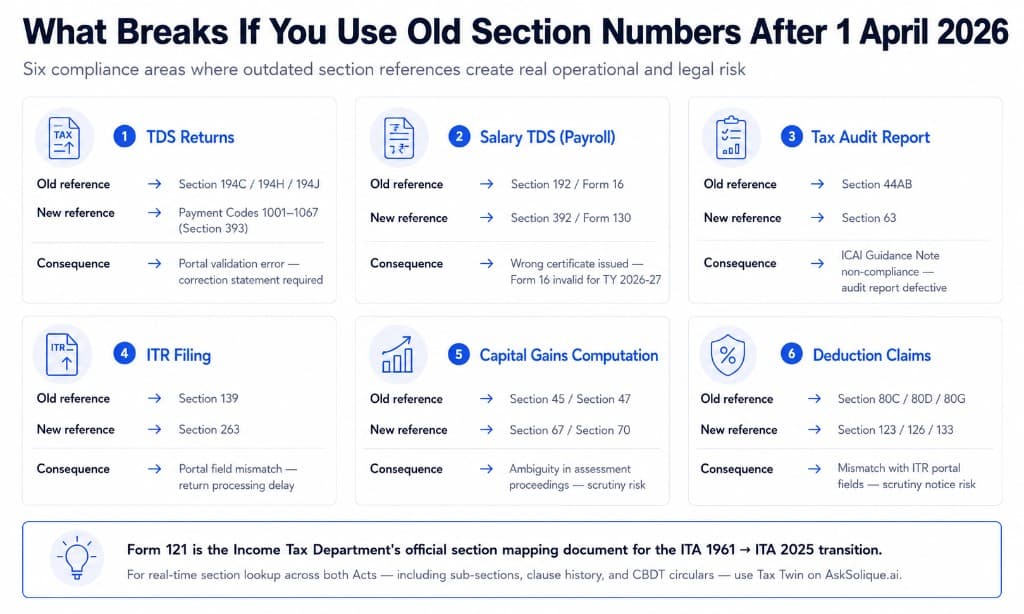
Using old section numbers is not just a clerical issue — it creates systemic errors.
- TDS returns: The Income Tax Portal's TDS return system validates payment codes against Section 393's table from Tax Year 2026-27. If you cite Section 194C instead of payment code 1003, the return will fail validation. You will need to file a correction statement.
- Tax audit reports: Form 3CA and 3CB reference the applicable section for audit. Post-April 2026, audit reports must cite Section 63 (not 44AB). ICAI's updated Guidance Note is expected to mandate this.
- Court filings and notices: Any submission, reply, or order referencing a tax period under the Income Tax Act, 2025 must use the new section numbers. Using old references for new Act periods creates ambiguity in proceedings.
- The Official Government Mapping Tool: The Income Tax Department has published the official section-wise mapping document correlating every provision of ITA 1961 with its ITA 2025 counterpart. This is the authoritative reference for transition disputes.
How Tax Twin Handles This for Your Practice
The renumbering creates a daily operational problem: your case law, CBDT circulars, and existing client records use old section numbers. When a client asks about a provision and you search using old terminology, you need a system that bridges both.
Tax Twin, AskSolique's AI-powered legislative intelligence feature, maps every provision of the Income Tax Act, 1961 against the Income Tax Act, 2025 in real time. Search using old section numbers, get the new section with full text. Search using new section numbers, trace back to the original provision, amendment history, and relevant CBDT circulars.
Map any section from old to new instantly using Tax Twin – asksolique.ai
Disclaimer:
The information contained in this document is for information purposes only. In no way, this document should be treated as advice. Please reach out to us or your consultants for undertaking detailed analysis.
This author will not be liable for any loss or damage caused by the reader's reliance on information obtained through this report. The contents are provided for your reference only.
About AskSolique
AskSolique is a context-centric AI tool built for Indian tax professionals.Click hereto access.
Try it for free and see how much time you win back to focus on what truly matters.
Let's Have That Conversation
If the ideas in this article resonate with challenges your firm is navigating, we would welcome a conversation.
Frequently Asked Questions
What is the new section number for Section 80C in the Income Tax Act 2025?
Section 80C of the Income Tax Act, 1961 is now Section 123 of the Income Tax Act, 2025, read with Schedule XV. The ₹1.5 lakh aggregate deduction limit and all eligible investment categories — LIC premium, PPF, ELSS, NSC, tuition fees, home loan principal — are unchanged.
Where did Section 10 go in the Income Tax Act 2025?
Section 10 of the Income Tax Act, 1961 has been replaced by Section 11 read with Schedule II to VII of the Income Tax Act, 2025. The exemptions are the same; they are now organized in tabular format in Schedule II rather than sub-clauses. References to specific sub-clauses (e.g., Section 10(13A) for HRA) now correspond to specific entry 11 in Schedule III.
What happens if I use old section numbers in TDS returns or filings after April 2026?
For TDS returns filed under the new Act (Tax Year 2026-27 onwards), the Income Tax Portal validates payment codes from Section 393's table — not old section citations like 194C or 194H. Old section numbers cannot be used under filings governed by the New Act.
When does the Income Tax Act 2025 take effect?
The Income Tax Act 2025 is effective from 01 April 2026. Transactions and tax periods before that date continue to be governed by the Income Tax Act 1961, so both numbering systems remain in active use during the transition - which is exactly why a mapping between them is needed.
Does the Income Tax Act 2025 change how much tax I pay?
No. The 2025 Act is a structural rewrite, not a rate change. Thresholds, deduction limits and computation rules carry over - the standard deduction, the Section 80C aggregate cap and the tax audit turnover limits are unchanged. What changes is the section number you cite when you rely on them.
Stay in the know with AskSolique.
Occasional insights on tax, regulation, and what’s new at AskSolique. Only when we have something worth sharing.